

Lasagna Swirls
Rotolo is lasagna’s lighter, more whimsical cousin: visually striking and deeply comforting

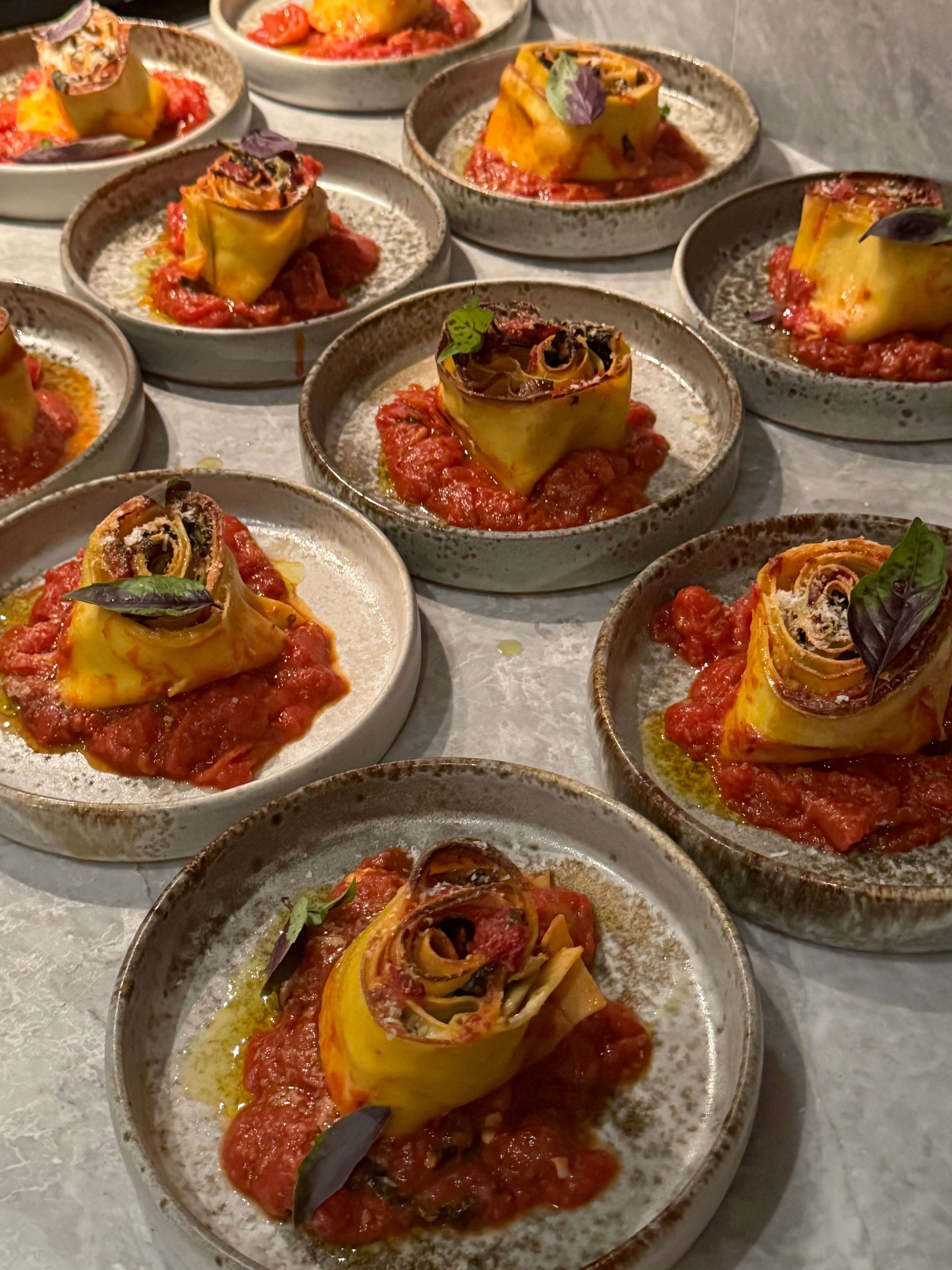
I get asked often what my daughter’s favorite meal is. I run a kitchen with a menu that changes weekly—constantly testing and tinkering. But whenever I make rotolo, it’s a dish she ensures no morsel hits the floor, and the only sounds you hear are soft slurps and little lip smacks. My family has coined it “the rollies.” This dish wins over adults with its comforting richness and delights children with its playful spirals.


For my most recent dinner party in the Hamptons, I teamed up with the incredibly talented Argentinian chef Hugo Heinz to cook over fire for a client’s birthday. They love beginning their dinners with a pasta course, and rotolo felt like the perfect opening—something that could be prepared ahead, tucked away, and brought to life with ease, allowing me to focus on the dynamic, flame-kissed main course.


Busy entertaining calls for rotolo. It can be prepared entirely ahead, even two days in advance. I like to prepare the components up to three days in advance, then assemble them a day or two before. From there, all that’s left is to slide the prepared dish into the oven 15 minutes before serving. One pan, no boiling water, no sauce splashing, no chaos.
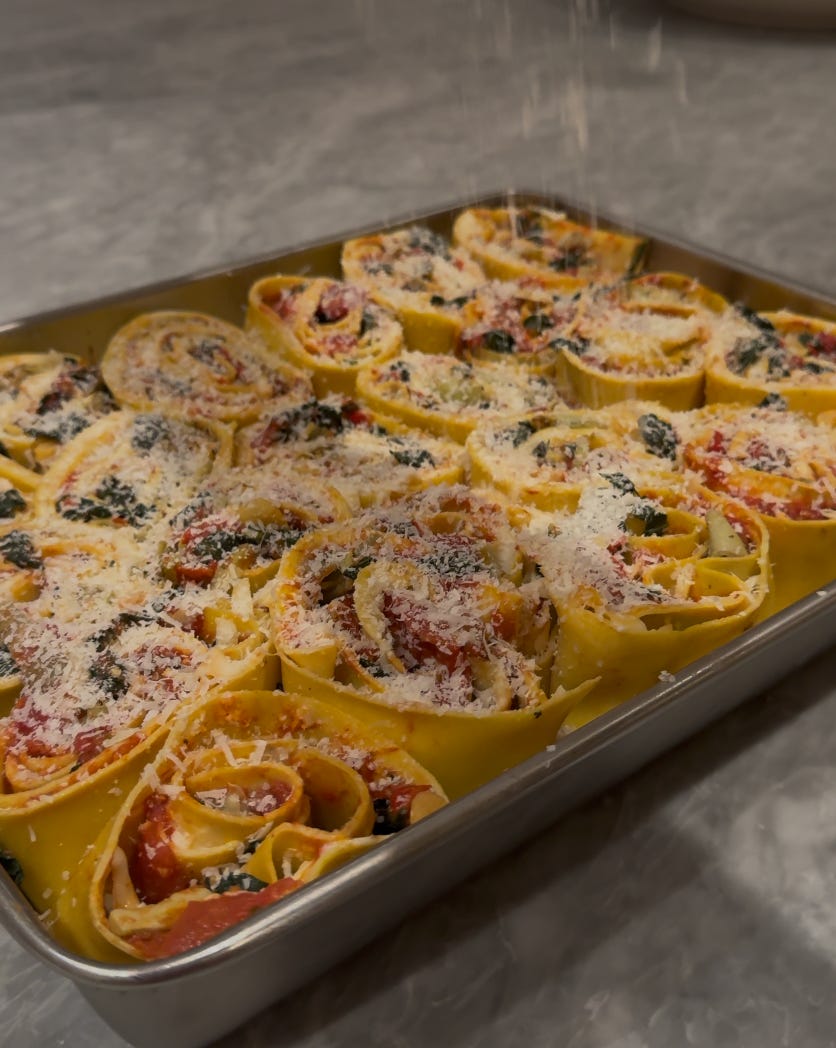
This is more of a guide than a recipe—generous, forgiving, and endlessly adaptable. I love a tomato base, but you can be as creative as your fridge allows. I recommend using a bechamel and a low-moisture cheese so the layers stay neat and the swirls hold tight. When it bakes, the flavors meld and you get those irresistible crisp edges atop tender noodles.
Rotolo is lasagna’s lighter, more whimsical cousin: visually striking, deeply comforting, and a joy to share.
Components
Pasta Dough
Ingredients
10 egg yolks
260g semolina flour, plus lots more for dusting
90g 00 flour
Sea salt
Recipe
Whisk together the semolina and 00 flour in a large bowl, create a well in the center, and add the egg yolks and a pinch of sea salt. Whisk egg yolks with a fork, slowly incorporating the flour until a shaggy ball forms. Work the dough on a clean counter until smooth; you may need to add a bit of water depending on several factors, such as the size of your eggs and the temperature in your environment. It shouldn’t be too difficult to knead, but it should have some resistance that eases as you work it. You want to finish with a well-worked and smooth dough. Wrap tightly in plastic and let the dough rest in the fridge for at least two hours, or overnight.


Roll out pasta sheets to a medium thickness (I use the KitchenAid attachment set to 5), then lay on a clean surface or sheet pan heavily dusted with semolina flour so the sheets don’t stick.
Once all your sheets are rolled out, boil in salted water for just a couple of minutes. Then, add them to an ice bath to shock, dry, and lay flat on another sheet tray. Add a bit of olive oil so they don’t stick.
Béchamel
Ingredients
4 tablespoons unsalted butter
4 tablespoons all-purpose flour
3 cups whole milk
Kosher salt and freshly ground black pepper, to taste
Pinch of freshly grated nutmeg (optional)
Recipe
In a medium saucepan, melt butter over medium-low heat. Add the flour and whisk until smooth, and cook until the flour is no longer raw.
Whisking constantly, slowly add half the milk in a thin stream and whisk until the liquid is absorbed. At first, the mixture will seize up, but it will loosen and become smooth as more milk is added. Slowly stream in the rest of the milk and whisk until smooth.
Once all of the milk is incorporated, continue to cook over medium-low, stirring frequently with a rubber spatula, until it starts to simmer, thicken, and coats the back of a stainless spoon. Remove from heat and season to taste with salt, pepper, and freshly-grated nutmeg.
Transfer to a heatproof bowl and press the top with a piece of plastic wrap to prevent a skin from forming. Béchamel can be refrigerated for 3 days; reheat gently over low heat, adding a splash of milk or water if too thick.
Rotolo Assembly
Set up your ‘mise en place’ of ingredients: cooked and lightly oiled pasta sheets, béchamel, cheeses, sauce, and any other fillings you’d like to include.


Fold the cooked pasta sheets in half, then cut down the middle to have two even sheets. Lay the first sheet on a piece of parchment paper, and spread bechamel, followed by the cheeses. Lay another sheet of dough on top, and spread your sauce with or without meat and any other toppings you’d like to include. Personally, I love a tomato sauce filled with soffrito and braised meat; see my previous post for that recipe. For cheese, opt for a low-moisture mozzarella or smoked scamorza to keep the noodles from becoming soggy, and finely-grated Parmigiano Reggiano. Sometimes I’ll layer in other favorites such as caciocavallo for nuttiness, and pecorino fiore for creaminess. From left to right, roll the two-layered sheets together horizontally as tightly as possible. Add to a parchment-lined sheet tray, and repeat until all your sheets are filled and rolled. Let the rolls rest in the fridge for at least 30 minutes.
Add your sauce to a base of your baking dish, then slice the rotolo as you would a Swiss roll and add to your baking dish. Wrap tightly and keep in the fridge for up to 2 days, or 2-3 months in the freezer.
Serving Rotolo
Preheat your oven to 400°F, and dust the top of your rotolo with finely-grated cheese like Parmigiano Reggiano. Bake for about 15-20 minutes until the edges are crisp and the dish is warm throughout. You can turn the broiler to high to encourage extra browning and crispiness on the top of the noodles.
I like to warm a little sauce in a saucepot, and serve the swirls atop a heaping ladle of sauce. Garnish with a swosh of your finest extra virgin olive oil, more finely-grated cheese, fresh basil, and freshly-cracked black pepper.
oh my god!